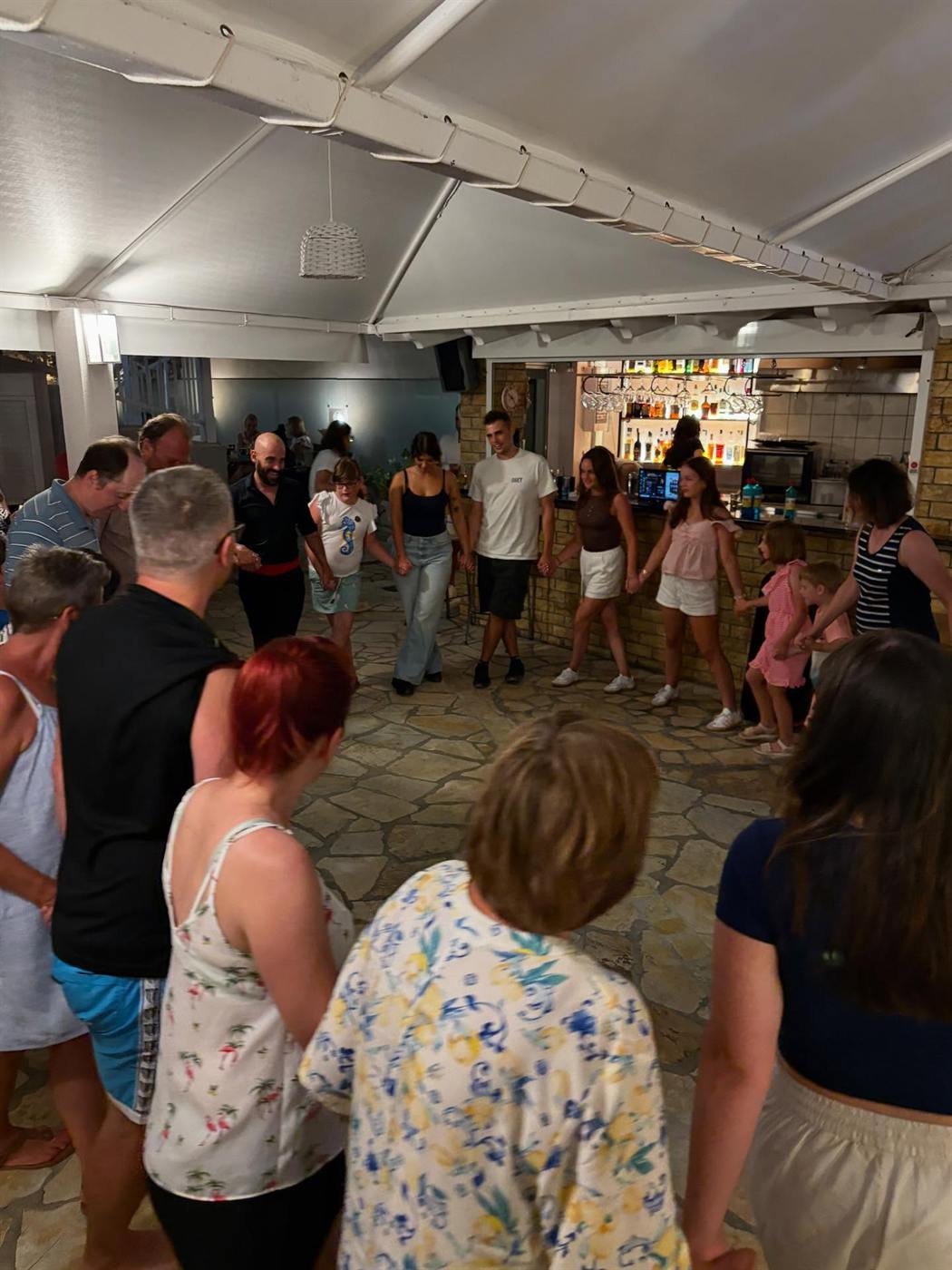
Dances only
Dance lesson
€25 per person
Dance lesson · 90 minutes
This session is for guests who want to spend the time learning Greek and Corfiot dances. It does not include the full costume, the tasting or the plate smashing of the basic experience. A tsoutsoumida or a tritsa may still be worn.
Dances only
€25 per person
Learn the steps as they are danced here, so you can join in confidently at the next festival. The lesson includes favourites such as syrtaki, also known as Zorba.
Wear light clothes you can move in, and comfortable shoes. Bring a second T-shirt in case you warm up.
You do not dress in the full traditional costume. A tsoutsoumida or a tritsa may be worn. No previous dance experience is needed. Each dance is taught first without music, and the music is added once the steps feel comfortable.
We meet the group and start with a short icebreaker before the first dance.
The Corfiot syrtos is a circle dance with flowing, graceful steps and deep roots in the island’s village celebrations. The dancers hold hands and move together, which gives the dance its strong sense of community.
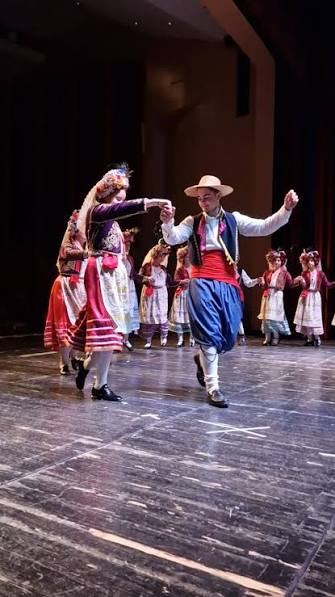
Hasapiko uses measured, deliberate movements and depends on rhythm, precision and a close connection between the dancers. It began in Constantinople and was historically linked to the city’s butcher guilds before becoming an important part of Greek music and dance culture.
Hasaposerviko grew from the same tradition, but its quicker tempo gives it a livelier and more playful character. It is danced in a line or open circle and remains a favourite for group celebrations.
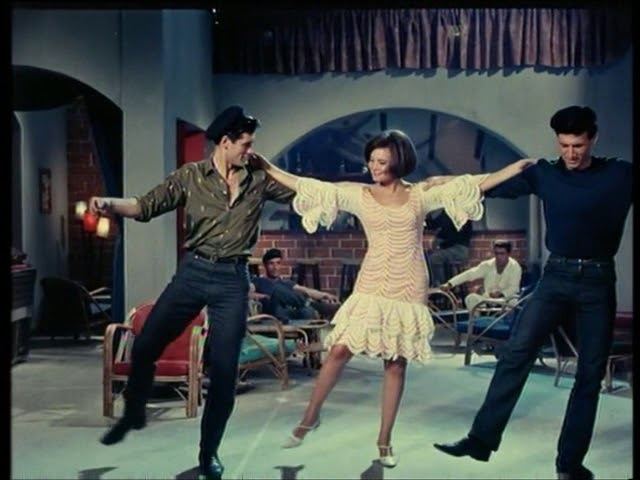
Syrtaki became famous around the world through the film Zorba the Greek (1964). It combines elements of hasapiko and hasaposerviko, beginning slowly before building into a faster and more energetic rhythm.
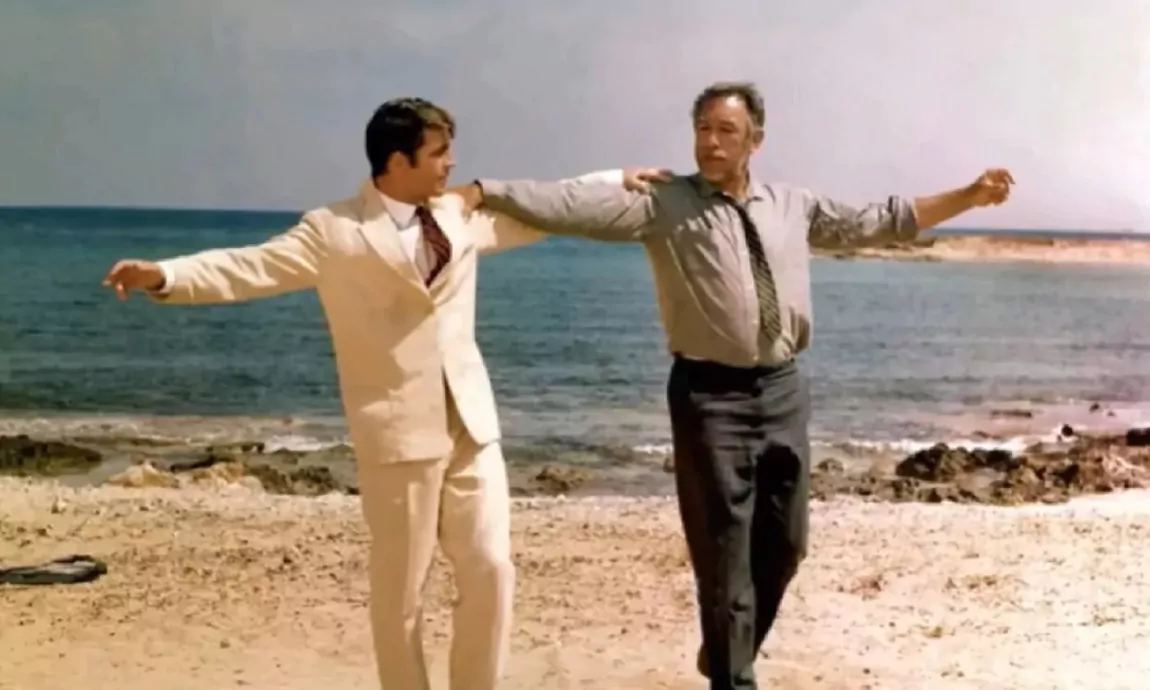
Zeimpekiko is a solo dance that leaves room for personal feeling and interpretation rather than following fixed choreography. Its roots are connected to the Zeibeks of Asia Minor, and it later became closely associated with Greek urban music, especially rebetiko.
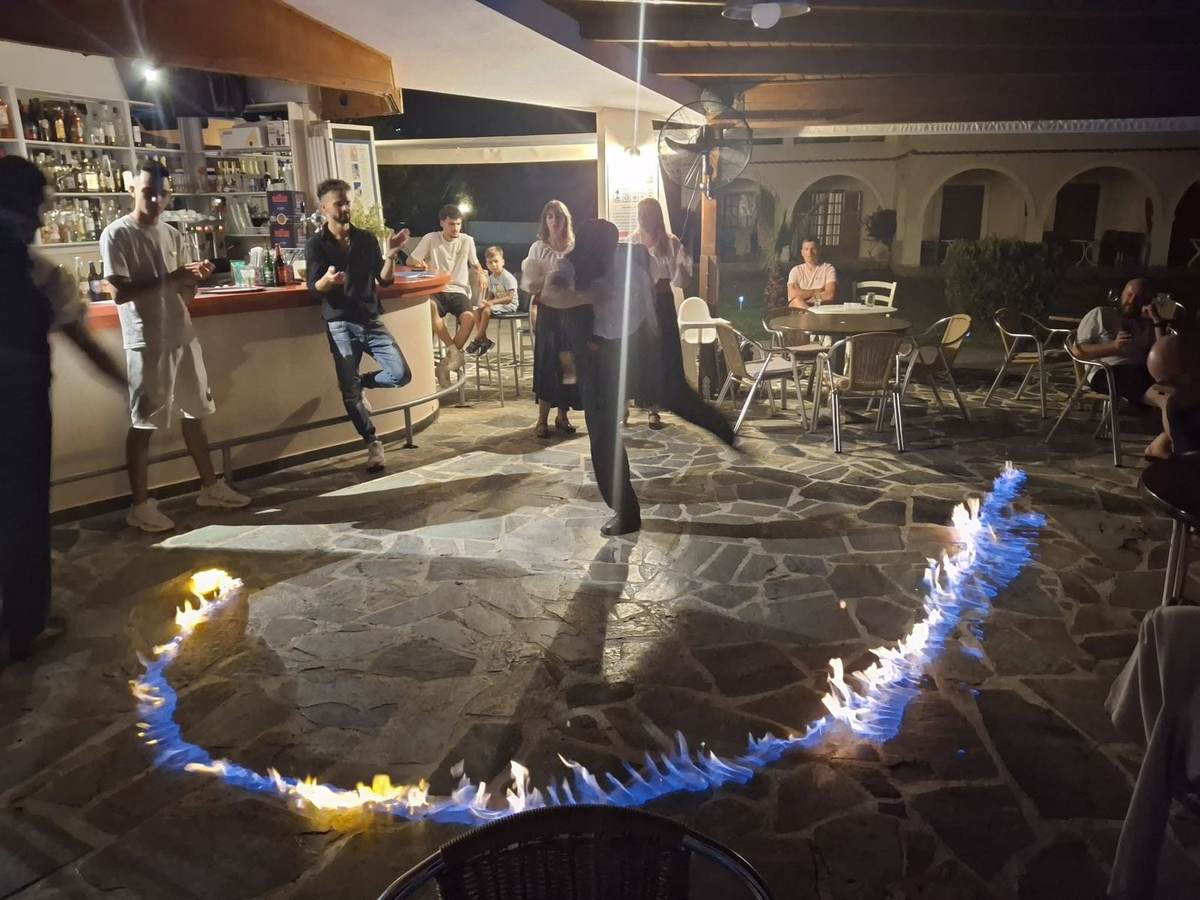
Everyone receives a certificate, and we close the lesson together.
The timing depends on the group’s pace. If time remains, we may teach another dance or add something extra. We also adjust the plan when needed. For example, zeimpekiko may be left out.